
No Laughing Matter
Comedian Deniz Göktaş is the latest cultural figure to be caught up in a tightening web of political pressure in Turkey.

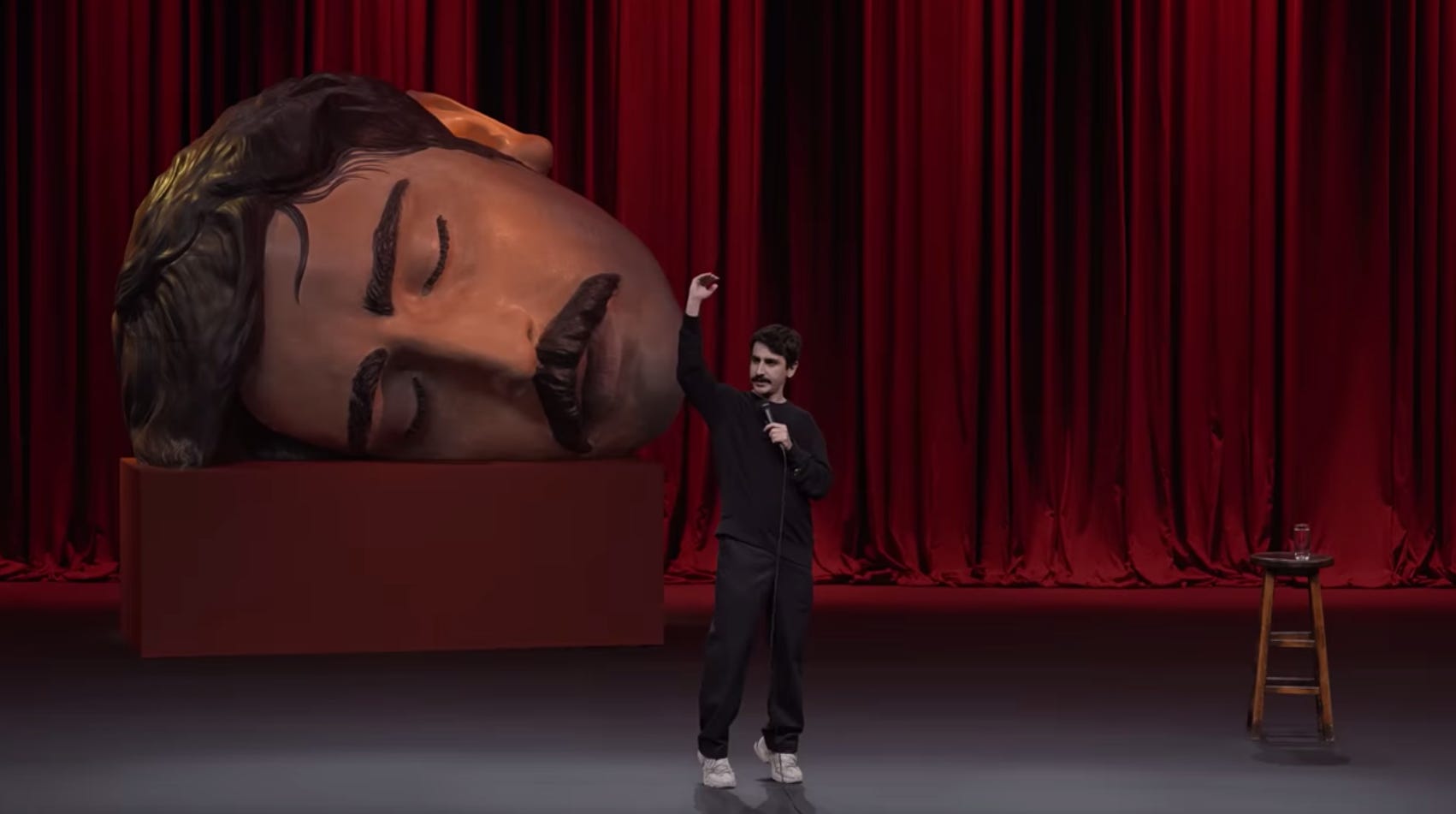
One month ago, Deniz Göktaş was performing his stand-up act at the Harbiye Open-Air Theater in Istanbul. This morning, he was brought before a prosecutor in the same city after being detained upon returning to Turkey last night from a short holiday abroad. After giving his statement in court, he was arrested pending trial on charges of “denigrating religious values” and “insulting the president,” both crimes in Turkey.
The 32-year-old comedian from a suburb of Ankara is the latest cultural figure to be caught up in a tightening web of political pressure on critical, marginalized, and oppositional voices, including artists, musicians, and journalists.
“There is nothing in that stand-up show that constitutes a crime – it is satire, and satire is protected speech under both Turkey’s Constitution and the European Convention on Human Rights,” Evin Barış Altıntaş, co-director of the Media and Law Studies Association (MLSA) said in a statement. “Detaining a comedian at the border, transferring him in reverse handcuffs, and seeking his arrest over the content of a comedy routine is grossly disproportionate and part of a widening pattern in Turkey.”
Comedian for a new generation
Göktaş became popular through a podcast he started during the Covid-19 pandemic, journalist Pelin Ünker wrote for DW Türkçe, calling him a comedian “who reflects the mood of a generation.” The show he performed at Harbiye, Ölü Deniz (Dead Sea/Dead Deniz), is his second full-length stand-up performance. It has been viewed 9.5 million times and counting since he uploaded it to YouTube less than two weeks ago.
“People love him not only because he says what can’t be said on their behalf, but also because they see their own lives told for the first time in such an authentic, unpretentious, and clever way,” scriptwriter Zehra Çelenk wrote about Göktaş for Fayn.
The topics of the jokes in Ölü Deniz ranged widely, from family relationships, masculinity, and pop culture to politics, religious debates, and current events. One joke referenced a 1998 incident in which the oldest son of President Recep Tayyip Erdoğan (then the mayor of Istanbul) was accused of causing a fatal hit-and-run accident. The comedian posted this bit on his social media channels after the investigation into him was opened, calling it “my favorite joke, for some reason not shared much.” According to MLSA, prosecutors also questioned Göktaş about jokes related to fasting during Ramadan, burkinis, and Erdoğan embracing his inner dictator through therapy.
Standup and comedy clubs have become increasingly common in Turkey in recent years as an alternative space for expression, though not one that is without risk.
“Humor has always been a punished field in Turkey, but especially in recent years, it is seen as an even greater danger, proportional to the pressure from the government,” said Özlem Altunok from Susma (Speak Up) Platform, a civil-society organization that documents and works to combat censorship and self-censorship in the arts. (Susma’s own X account was blocked in Turkey last month.)
Turkey has a long tradition of satirical magazines and political humor, and just as long of tradition of a censoring and prosecuting them. Cartoonists such as Musa Kart have been jailed while the magazine LeMan faced a mob attack, detentions of its staff, and blocking of its print distribution and social-media accounts. Just this April, comedian Tuba Ulu was detained and investigated over a joke about Ottoman Sultan Suleiman the Magnificent.
Taboos and online targeting
Humor is seen as a threat because it is “easily understood and very effective. It also spreads fast through social media,” Altunok said. Social media is also often employed in creating a backlash, she added: “The same cycle is always happening: arbitrary and vague accusations, investigations, detentions, and trials as a result of targeting and complaints by media, associations, individuals, or trolls close to the government.”
After the release of his performance on YouTube, Göktaş was criticized online by current or former members of Turkey’s ruling party and its political allies. According to Turkish news reports, he was also the subject of 185 public complaints through ÇİMER, an online government transparency platform that critics say has been used to to encourage a “culture of informing” and a broad network of everyday surveillance.
In addition to touching on “taboo” subjects, Göktaş’s performance was “a slap in the face to the polarization and intolerance of criticism that the government is trying to create,” said Altunok. “His performance, and the stance he subsequently adopted, send an important message to the field of culture and art, which is currently succumbing to self-censorship: that it’s impossible to move forward without satire, creativity, criticism, and free thought.”
The cafe and cinema Kulis in Kadıköy is hosting six free screenings of the video of Göktaş’s (Turkish-language) performance this weekend; contact them via social media to reserve a seat.
To learn more about the history of political humor in Turkey, read my 2019 article “The serious business of satire in Turkey” on the IPI website.
i haven't said anything about this yet and this is as good a place as any: satire is protected speech under the constitution and the echr, full stop. detaining a comedian at the border in reverse cuffs over a comedy set isn't about anything but making everyone else quieter. it only works if we get quieter. deniz didn't. the screenings this weekend are the right answer.